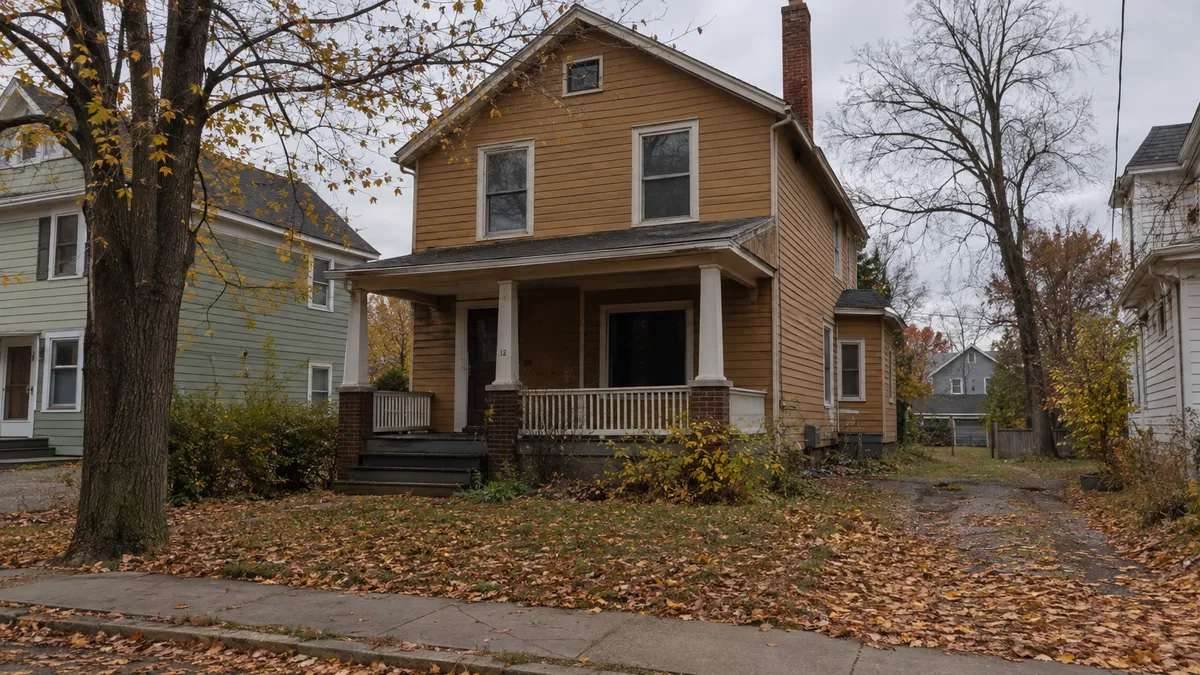
Owning a Vacant Property in the Capital Region? What to Do Before Winter
If you own a home in Albany, Schenectady, Troy, Saratoga Springs, or anywhere else in the Capital Region that's been sitting empty, you know that an unoccupied house doesn't stay maintenance-free for long — especially once the temperatures start to drop.
Whether the property came to you through an inheritance, a move, a difficult tenant situation, or any other reason, October is one of the most important months of the year to take stock of where things stand. Upstate New York winters can be hard on a home, and a vacant one faces risks that an occupied house doesn't.
This guide covers what to think about before winter arrives, what holding a vacant property actually costs, and how to decide whether holding or selling makes more sense for your specific situation.
Why Vacant Properties Need Extra Attention Before Winter
An occupied home naturally benefits from daily activity: heat runs, small problems get noticed early, and someone is always there to catch a leak before it becomes a larger issue. A vacant property doesn't have any of those built-in protections.
Upstate New York winters can bring extended periods of below-freezing temperatures, heavy snowfall, and ice. When a vacant home isn't properly prepared, the risk of damage rises considerably.
Common Cold-Weather Risks in Vacant Homes
- Frozen and burst pipes. This is one of the most common and costly problems in vacant homes during Upstate NY winters. When heat isn't maintained at a minimum level, water in pipes can freeze, expand, and cause pipes to burst — leading to significant water damage if it goes undetected.
- Roof and gutter damage. Ice dams can form when heat escapes through the roof unevenly, causing water to back up under shingles. Clogged gutters contribute to the problem. Damage can go unnoticed for weeks in a vacant home.
- Moisture and mold. Without adequate ventilation and temperature control, humidity can build up, creating conditions that support mold growth — particularly in basements, crawl spaces, and poorly insulated areas.
- Pest intrusion. Rodents and other pests seek warmth in colder months. A vacant home with any gaps in the foundation, siding, or roofline can become an entry point.
- Vandalism and unauthorized entry. Unoccupied properties can attract unwanted attention. Visible vacancy — overgrown lawns replaced by deep snow, no lights, accumulated mail — can signal that no one is monitoring the home.
- Liability concerns. If someone is injured on the property — whether a utility worker, a neighbor, or a trespasser — the property owner can potentially face liability. A vacant, unsecured property can increase that exposure.
The Real Cost of Holding a Vacant Property Through Winter
One thing many property owners underestimate is how much it costs to simply hold a vacant home through a Capital Region winter. These costs can add up quietly, month after month.
Ongoing Carrying Costs to Account For
- Property taxes. Property taxes continue regardless of whether a home is occupied. In Albany County and surrounding areas, property tax obligations don't pause for vacant or inherited homes.
- Homeowners insurance. Standard homeowners insurance may not cover a home that has been vacant for an extended period — typically 30 to 60 days depending on the policy. Many insurers require a separate vacant or unoccupied dwelling policy, which tends to cost more than standard coverage. It's worth reviewing your current policy if you haven't recently.
- Utilities. Even a vacant home typically needs minimal heat during winter to prevent pipe damage. That means a heating bill even when no one is living there. Water service, gas, and electricity all carry base charges and usage costs.
- Maintenance and repairs. Snow removal, lawn care, and ongoing upkeep don't stop because a home is vacant. Municipalities can issue violations for properties that become a nuisance — including for overgrown vegetation, unshoveled walkways, or visible disrepair.
- Security and monitoring. Some property owners invest in security cameras, smart locks, or periodic check-ins from a property manager or local contact to keep an eye on a vacant home through the winter.
- Any outstanding mortgage. If the property still carries a mortgage balance, that payment continues each month as well.
When you add these costs together, holding a vacant property through a Capital Region winter can represent a meaningful expense — often more than owners initially expect when they first take on the property.
Practical Steps to Protect a Vacant Capital Region Property Before Winter
If you've decided to hold the property — at least for now — here are practical steps worth addressing before cold weather arrives.
Heating and Plumbing
- Keep the thermostat set to at least 55°F throughout the winter. This is generally considered the minimum temperature to reduce the risk of pipe freezing, though local HVAC contractors may recommend higher depending on the home's insulation and pipe locations.
- Have the heating system inspected and serviced before winter. A furnace or boiler that fails in a vacant home can go unnoticed for days.
- Consider having a plumber winterize sections of the plumbing that won't be in use, or drain water from lines that run through unheated areas.
- Know where the main water shutoff is located. If a pipe does burst, the ability to shut off the water quickly can limit the extent of damage.
Roof, Gutters, and Exterior
- Clean gutters before the first freeze so water can drain properly and ice dams are less likely to form.
- Inspect the roof for missing or damaged shingles before winter — small issues can become large ones after a heavy snowfall or ice storm.
- Check that exterior doors and windows seal properly. Drafts add to heating costs and can allow moisture or pests to enter.
- Look for any gaps or openings in the foundation, siding, or areas where utility lines enter the home, and seal them before cold weather drives rodents indoors.
Insurance and Legal Considerations
- Contact your insurance carrier to confirm that your current policy covers the property during extended vacancy. If it doesn't, ask about a vacant dwelling endorsement or a separate policy. Gaps in coverage during winter can be financially significant.
- If the property is part of an estate or has unresolved ownership questions, consult with a New York estate attorney about your obligations as the person managing or responsible for the property in the interim.
Appearance and Security
- Arrange for snow removal during the winter so sidewalks and walkways are cleared — both for safety and to avoid municipal violations.
- Consider leaving lights on a timer inside the home to reduce the visible appearance of vacancy from the street.
- Inform a neighbor, local contact, or property manager that the home will be vacant so someone can report issues early.
When Holding Starts to Feel Like Too Much
For some property owners, taking care of all of this — especially from a distance — starts to feel overwhelming. If you've been managing a vacant home for several months already, you may be wondering how much longer it makes sense to continue.
There's no universal answer, but some situations tend to prompt homeowners to seriously consider selling:
- The carrying costs are adding up each month without a clear plan for what to do with the property.
- The home needs significant repairs or updates that you're not prepared to manage or finance.
- You live far from the Capital Region and can't easily check on the property yourself.
- The property is part of an estate and multiple family members need to agree on what to do.
- You've already been trying to decide for several months and no clear plan has emerged.
- You simply don't want to manage the property any longer and would prefer to be done with it.
None of these situations means you have to sell — but they're worth being honest about. Continued holding has real costs, both financial and in terms of time and stress.
Selling a Vacant Property As-Is: What That Generally Involves
If you've decided that selling makes more sense than holding the property through another Capital Region winter, a direct cash sale is one option worth understanding — particularly if the home needs repairs, hasn't been updated in years, or would require significant preparation before a traditional listing.
What Selling As-Is Generally Means
Selling a home as-is means the seller is not making repairs or improvements before the sale. The buyer is purchasing the property in its current condition. This can simplify the process considerably for homeowners who don't want to manage renovations, coordinate contractors, or cover upfront repair costs.
In a direct cash sale with a local buyer, the general process typically works like this:
- You provide information about the property.
- The buyer assesses the home — sometimes in person, sometimes remotely based on available information.
- If interested, the buyer presents a cash offer for the property in its current condition.
- If you accept, you proceed to closing. There's no traditional buyer financing involved, which can simplify the timeline.
- You choose a closing date that works for your situation.
Tradeoffs to Consider
A direct cash sale typically results in a lower sale price than a fully renovated home sold at peak market conditions through a traditional listing. That tradeoff is real and worth understanding clearly before making a decision.
What you're exchanging is price for simplicity, speed, and condition flexibility. Whether that exchange makes sense depends on your personal situation — the cost and scope of needed repairs, how long you've already been holding the property, what carrying costs are continuing each month, and how much time and energy you're willing to put into preparing and listing the home.
Some homeowners find that after factoring in repair costs, agent commissions, and months of continued carrying costs during a traditional listing process, the net difference in what they'd actually receive is smaller than expected. Others find that the home is in reasonable shape and a traditional listing may serve them better.
The right answer depends on your specific property, your financial goals, and your timeline.
Getting a Clearer Picture Before Deciding
If you're not sure whether to hold or sell, a few steps can help you think through the decision more clearly:
- Add up actual holding costs. Calculate what you're currently spending each month on taxes, insurance, utilities, and maintenance. Project that over the next three to six months.
- Get a sense of repair scope. If the home needs significant work, get a rough estimate of what repairs would cost before listing — even an informal assessment can help clarify the numbers.
- Request a cash offer. Getting a cash offer from a local buyer doesn't commit you to anything. It gives you a reference point for what a direct sale would look like so you can compare it against other options.
- Talk to a real estate agent. Getting a comparative market analysis from a local agent can give you a sense of what the home might sell for on the open market if you chose to list — with or without repairs.
- Consult the right professionals for legal or tax questions. If the property is part of an estate, involves a trust, or has tax implications, an attorney or CPA familiar with New York State law can help you understand those considerations before making a major decision.
There's no single right answer for every vacant property situation. The goal is to make a decision that's based on a clear picture of your options — not uncertainty or delay.
Thinking About Selling a Vacant Property in the Capital Region?
If you own a home in Albany, Schenectady, Troy, Saratoga Springs, or the surrounding area that's been sitting vacant, 518 Cash 4 Homes works with Capital Region property owners who are exploring whether a direct cash sale might fit their situation.
You can tell us about the property and learn what options may be available — without any obligation or pressure. If a direct sale makes sense, we can walk you through what that process generally looks like. If it doesn't, we'll tell you that too.
Request a Cash Offer from 518 Cash 4 Homes →
For questions involving legal obligations, estate or probate matters, tax consequences, or insurance coverage for vacant properties, we recommend consulting a licensed New York attorney, CPA, or insurance professional who can advise based on your specific circumstances.
