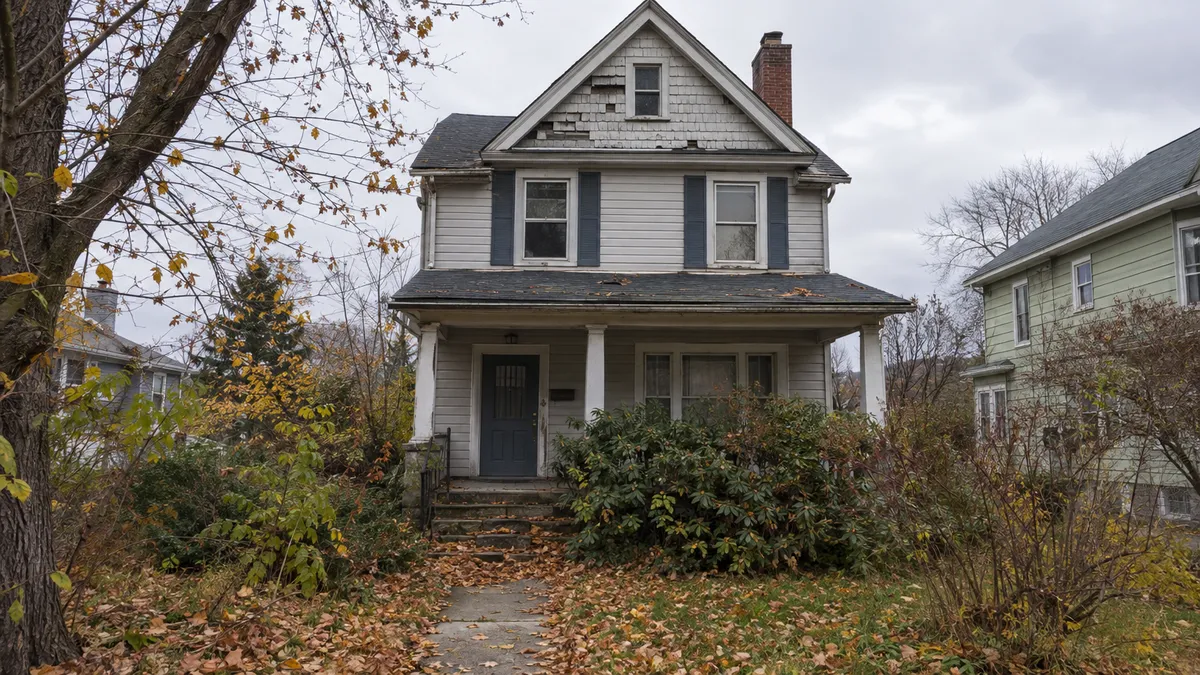
The Question Most Capital Region Homeowners Ask at Some Point
If you own a home in Albany, Schenectady, Troy, Saratoga Springs, or anywhere in the Capital Region, and that home needs some work, you have probably wrestled with a familiar question: Should I fix it up before selling, or just sell it the way it is?
There is no single right answer. The decision depends on your property's specific condition, your financial situation, your timeline, and what matters most to you in the sale. This guide is designed to help you think through the decision clearly — without pressure in either direction.
Start Here: What Kind of Work Does the Home Actually Need?
Not all repairs are the same. Before deciding whether to fix or sell as-is, it helps to sort the needed work into general categories.
Cosmetic or Surface-Level Updates
These are things that affect how the home looks but not how it functions — dated paint colors, worn carpet, older fixtures, scuffed trim, or an outdated kitchen that still works fine. Cosmetic updates can improve buyer first impressions, but they may not recover their full cost at closing depending on the market and buyer expectations.
Mechanical or System Issues
These involve the home's core systems: heating, cooling, plumbing, and electrical. A furnace at the end of its service life, an aging water heater, an outdated electrical panel, or old galvanized pipes fall into this category. These repairs tend to be more expensive. Furnace replacement, for example, typically runs in the range of $2,500 to $6,000 depending on the unit type and ductwork. A central air conditioning replacement can range from $3,500 to $7,500 or more for a standard split system.
Structural or Safety Concerns
Foundation issues, roof problems, water intrusion, or major structural damage represent the most serious category. These can affect a buyer's ability to obtain financing through a traditional lender, which limits your pool of potential buyers if you list on the open market. Foundation repairs can range from a few thousand dollars for minor crack sealing to $20,000 or more for significant stabilization work.
Older Home Considerations in Upstate New York
Much of the housing stock in Albany and the Capital Region is older. Homes built before 1980 may also carry what are sometimes called hidden costs — things like asbestos-containing materials, lead paint, outdated electrical panels, or galvanized plumbing that can complicate repair estimates significantly. If your home is older, it is worth getting a clear picture of what you are actually dealing with before making repair commitments.
The Real Cost of Repairing Before Selling
One of the most common surprises homeowners encounter is that pre-sale repair costs run higher than they expect — and often take longer than anticipated.
For a home that needs mainly cosmetic work, a realistic refresh budget often runs $8,000 to $15,000 or more. For a home with aging systems and deferred maintenance, the scope can expand considerably. Stack a roof, an HVAC system, and kitchen work together, and you can be at $22,000 or more on the lower end — and significantly higher depending on the extent of the work needed and current contractor pricing.
Beyond the direct repair costs, there are additional factors to account for:
- Contractor scheduling delays. Skilled tradespeople remain in high demand across most of the country, including Upstate New York. Getting work scheduled and completed can take longer than you expect, which extends the time your home is not yet on the market.
- Holding costs during the repair period. Every month the home is not sold, you continue to pay property taxes, utilities, insurance, and any mortgage costs.
- Unexpected scope changes. Once contractors open walls, access crawlspaces, or inspect systems, additional issues sometimes surface that were not visible in an initial walkthrough.
- Material costs. Building materials remain elevated compared to prior years, and certain components — particularly HVAC systems and specialized parts — can carry longer lead times.
It is worth building in realistic contingency room when estimating repair budgets. A gap between estimated and actual costs is common.
When Repairing Before Selling May Make Sense
Repairing before listing is not the wrong choice for every homeowner. It may be worth considering when:
- The needed work is primarily cosmetic and genuinely within your budget without straining finances.
- You have time to complete the work carefully before putting the home on the market.
- The local market in your area has strong buyer demand for updated, move-in-ready properties and the comparable sale prices reflect a meaningful premium for renovated homes.
- You have reliable, trusted contractors lined up and a realistic sense of what the work will cost.
- You do not need to sell on a particular timeline and can absorb holding costs during the repair period.
If all of those conditions are true for your situation, making targeted repairs before listing may allow you to attract a broader buyer pool and potentially a stronger sale price. The key word is targeted — not every repair produces a return that justifies the investment. Consulting with a local real estate professional about which improvements are most likely to affect buyer perception and sale price in your specific neighborhood can be helpful before committing to a repair budget.
When Selling As-Is May Be Worth Considering
Selling as-is means offering the property in its current condition without making repairs or updates as part of the sale. This approach has real tradeoffs, but it also has genuine advantages for the right situation.
Selling as-is may deserve serious consideration when:
- The repair scope is extensive. If the home needs significant mechanical, structural, or systems work, the combination of repair costs, time, and uncertainty can shift the math considerably.
- Budget is limited. Not every homeowner has tens of thousands of dollars available to invest in repairs before a sale — particularly for homeowners managing an inherited property, a vacant home, or a property alongside other financial priorities.
- Time matters. If your circumstances require selling on a particular timeline — due to a job relocation, a family change, estate settlement, or another reason — the open-ended nature of a repair project may not fit.
- The home has deferred maintenance. Deferred maintenance has a compounding quality. A small issue left unaddressed tends to grow into a larger one. Selling as-is removes the need to catch up on years of deferred work before listing.
- Avoiding contractor management is appealing. Managing multiple contractors, inspections, permits, and timelines is real work. Some homeowners would simply rather not take that on.
Selling as-is does not necessarily mean giving the home away. It means finding buyers who are comfortable with the property's current condition — and in many cases, a direct cash buyer is the most straightforward path for an as-is sale.
Thinking Through the Numbers for Your Situation
Rather than deciding based on a general principle, it helps to think through the actual numbers for your property. Here is a simple framework:
Step 1 — Get a Realistic Repair Estimate
Before making any decision, get a genuine sense of what the needed work would cost. If you have not already done this, a home inspection can help identify issues you may not be aware of. Then get at least two or three contractor quotes on any significant work. Make sure the estimates account for materials, labor, permits where required, and a reasonable contingency for things that sometimes surface once work begins.
Step 2 — Estimate What a Repaired Home Might Sell For
This is where a local real estate professional's input can be genuinely useful. What are comparable updated homes selling for in your neighborhood right now? What would a buyer likely pay for a renovated version of your property? This number is your potential ceiling — the most you might realistically hope to net from a repaired sale, before subtracting costs.
Step 3 — Subtract Your True Selling Costs
If you list with a real estate agent, factor in commission costs — in 2026, combined commissions often still run in the range of 5% to 5.5% of the sale price, though structures have become more flexible. There are also seller closing costs, potential concessions after inspection, and the carrying costs during the repair period and time on market. These are real costs that reduce your net proceeds.
Step 4 — Compare That to an As-Is Sale
An as-is cash offer will typically reflect the property's current condition. It will likely be lower than a fully renovated sale price. But compare it to the net — not the gross — of a repaired sale after subtracting repair costs, commissions, carrying costs, and holding time. The gap between the two options is often narrower than it appears when comparing only the headline prices.
Questions to Ask Before You Decide
Here are a few honest questions that can help clarify the decision for your specific situation:
- Do I have the funds available to pay for repairs without putting financial strain on myself or my family?
- Do I have time to wait for repairs to be completed and then for the home to sit on market?
- Am I prepared for the possibility that repair costs come in higher than initially estimated?
- What happens to my plans if the home sits unsold for 60 or 90 days after listing?
- Is the goal maximum sale price, or is the goal a smooth, predictable outcome?
- Would I rather manage a renovation process, or would I rather sell and move on?
There are no wrong answers here. The right choice is the one that fits your actual situation — not a general rule about what sellers should do.
What Selling As-Is to a Direct Buyer Looks Like
If selling as-is sounds like a reasonable path for your situation, one option worth understanding is a direct cash sale. A direct buyer — sometimes called a cash home buyer — purchases the property without requiring you to make repairs, stage the home, or list it on the open market.
A direct sale typically involves a simpler process: you provide information about the property, the buyer evaluates it, and if there is mutual interest, a cash offer is presented. If you accept, the closing process moves forward without a traditional buyer's mortgage contingency, which eliminates some of the uncertainty that can stall a conventional sale.
This type of sale is not the right fit for every homeowner. But for homeowners who prioritize convenience, timeline flexibility, or avoiding the repair-and-list process, it is a path worth understanding before you commit to a different approach.
It is also worth doing your homework on any buyer you work with. Ask how they determine their offer, what the process looks like, and whether there are any fees or costs you would be expected to cover. A reputable buyer will answer these questions straightforwardly.
A Note on Timing in Upstate New York
If you are weighing this decision in late October, timing is worth factoring in. Upstate New York winters arrive firmly and early. A home that is unheated, poorly insulated, or has deferred maintenance is more vulnerable to cold-weather damage — frozen pipes, ice dams, moisture intrusion — once temperatures drop.
Holding a home through winter carries additional practical considerations, particularly if the property is vacant. Heating costs, maintenance obligations, and the risk of winter-related damage are all factors that affect the true cost of waiting until spring to sell.
None of this means you should rush a decision you are not ready to make. But if you have been putting off the repair-or-sell question, late autumn is a reasonable time to get clear on your plan before winter settles in.
Ready to Understand Your Options?
If you own a Capital Region property and you are weighing whether to repair before selling or explore a direct as-is sale, 518 Cash 4 Homes can give you a starting point. Tell us about the property, and we will help you understand what a direct cash offer might look like for your specific situation — with no obligation and no pressure to accept.
Knowing the number gives you something concrete to compare. Whether you ultimately list with an agent, make repairs, or sell directly, having that information costs you nothing and helps you make a more informed decision.
Request a Cash Offer from 518 Cash 4 Homes →
Thinking about what selling as-is actually means in practice? Our earlier article, Selling Your Home As-Is in the Capital Region: What It Means and How to Decide, covers the basics in detail.
This article is intended for general educational purposes. Repair costs, sale prices, and market conditions vary by property, location, and timing. For guidance specific to your situation, consult a licensed contractor for repair estimates, a local real estate professional for market pricing, and appropriate advisors for financial or legal questions.
